9 contract bottlenecks that AI can fix for GCs
When Legal is done right, your team’s reputation shifts from a “department of no” to business accelerator. But unoptimized or outdated processes keep the classic Legal bottlenecks firmly in place, slowing down innovation and business momentum.
In reality, most legal teams are managing an enormous volume of agreements while working with processes that were never designed to scale. Contracts may be stored across different systems, reviewed through long email chains, and tracked manually. Much of the work involves repetitive tasks that consume time but add little strategic value.
The result is a frustrating dynamic: legal teams are expected to move faster while still protecting the organisation from risk.
This is where AI is beginning to make a real difference.
Rather than replacing lawyers, AI is helping remove the everyday friction that slows contracting down: automating routine tasks, surfacing key insights faster, and giving legal teams the tools they need to support the business more efficiently.
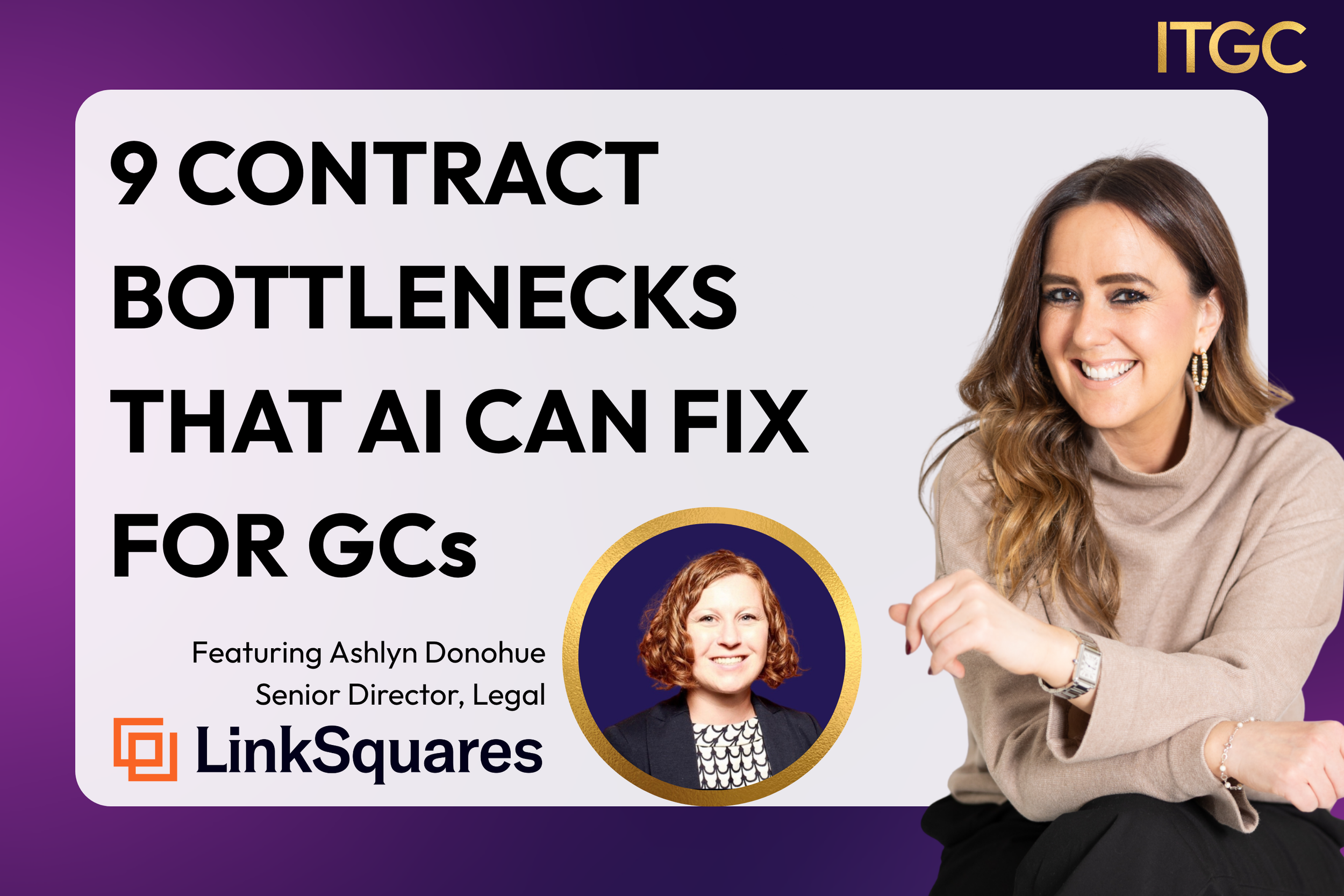
I sat down to chat about all this with Ashlyn Donohue (Senior Director, Legal), LinkSquares.
Below are nine common contract bottlenecks AI is helping in-house legal teams eliminate.
1.Spending hours searching for contracts
Contracts are often stored across shared drives, inboxes, and multiple internal systems, making them difficult to locate quickly. Legal teams can lose valuable time searching for agreements or confirming contract terms for internal stakeholders, often under pressure (for example, coming up to renewal dates).
AI fix: AI-powered repositories and searches enable teams to quickly find contracts using natural language queries, helping you to locate key agreements, clauses, or obligations within seconds.
2.Manually reviewing routine clauses
Legal teams often spend significant time reviewing standard clauses that appear repeatedly across contracts. This manual approach is a terrible use of your time and expertise. It also slows the contracting process and limits the time legal teams can spend on higher-value strategic work.
AI fix: AI tools can automatically identify and summarise standard clauses, allowing legal teams to focus their attention on non-standard or higher-risk terms.
3. Tracking key obligations across agreements
Important obligations are often buried in contracts (for example, renewal deadlines, reporting requirements, or service levels). Missed obligations can lead to operational issues, financial penalties, missed revenue targets, and strained business relationships if stakeholders think Legal is to blame for a poor commercial outcome.
AI fix: AI can automatically extract and track key obligations across contracts, helping teams stay ahead of deadlines and commitments.
4. Slow contract review cycles
Traditional contract review processes often involve multiple document versions and long email chains between legal and business teams. Slow review cycles can delay deals, impact revenue timing, and frustrate internal stakeholders.
AI fix: AI-assisted review helps identify key clauses and potential issues quickly, accelerating contract review and enabling legal teams to support faster deal cycles.
5.Missing risky or non-standard clauses
Identifying deviations from standard contract language can be difficult, particularly across large contract portfolios. This risk is especially acute with inevitable late nights and end of quarter pressure in-house legal teams have to deal with regularly. Non-standard clauses may introduce financial exposure or legal risk that goes unnoticed until a dispute arises.
AI fix: operating as your second pair of eyes, AI tools can flag unusual or non-approved language, helping legal teams quickly identify and address potential risks.

“Taking an AI-first approach to contract review accelerates deal velocity, provides reviewers real-time guidance on your legal function's position on key clauses, and empowers them to make autonomous decisions faster.” - Ashlyn Donohue (Senior Director, Legal, LinkSquares)
6.Version chaos during negotiations
There is nothing more stressful than being pinged different versions of the same contract from different platforms. Version 1 in Slack, 2 in Notion, 3 in email, 4 in Google Docs… It becomes impossible (not to mention time consuming) to track changes and maintain clarity across stakeholders.
AI fix: AI-powered document comparison and version tracking help legal teams quickly identify changes and maintain control throughout the negotiation process.
7.Limited visibility into contract data
Many organisations struggle to extract meaningful insights from their contract portfolios, or understand how some contracts relate to others. Without clear contract data, legal leaders may find it difficult to answer questions about revenue exposure, supplier obligations, or risk concentration.
AI fix: one of AI’s greatest strengths in the legal industry is its ability to analyse contract data at scale, turning agreements into structured information that supports better decision-making.
8.Manual reporting for leadership
GCs are increasingly expected to provide insights on contract activity, risk exposure, and operational performance. Great modern GCs are proactive in doing this so they can regularly show the wider business how well they are performing, and where they need extra resources. Preparing these reports manually can be time-consuming and difficult to scale.
AI fix: AI-powered analytics are your best friend here, allowing legal teams to generate reports and dashboards automatically, giving leadership greater visibility into contracting activity.
9.Preparing contracts for audits or due diligence
Last but not least: there may come a day when you have to deal with an audit, or very likely a funding round or acquisition process. And nobody talks about the fact that GCs have to manage all that on top of your day job. A sudden request to quickly provide accurate contract records is very stressful, and manually gathering and reviewing agreements can slow due diligence and create additional pressure on legal teams.
AI fix: AI tools help organise and analyse contracts quickly, enabling legal teams to prepare for audits and due diligence with greater confidence.
Most contracting bottlenecks don’t come from legal teams. They come from manual processes, fragmented information, and limited visibility across agreements.
Legal teams are often asked to review contracts faster, provide better oversight, and deliver more insight to the business, all while contract volumes continue to grow.
LinkSquares is helping address these operational challenges by removing some of the repetitive friction from the contracting process. Instead of spending hours locating contracts, reviewing routine clauses, or tracking obligations manually, legal teams can use LinkSquares’s AI-powered platform to surface key information quickly and focus their attention where it matters most. Learn more at LinkSquares.com.